
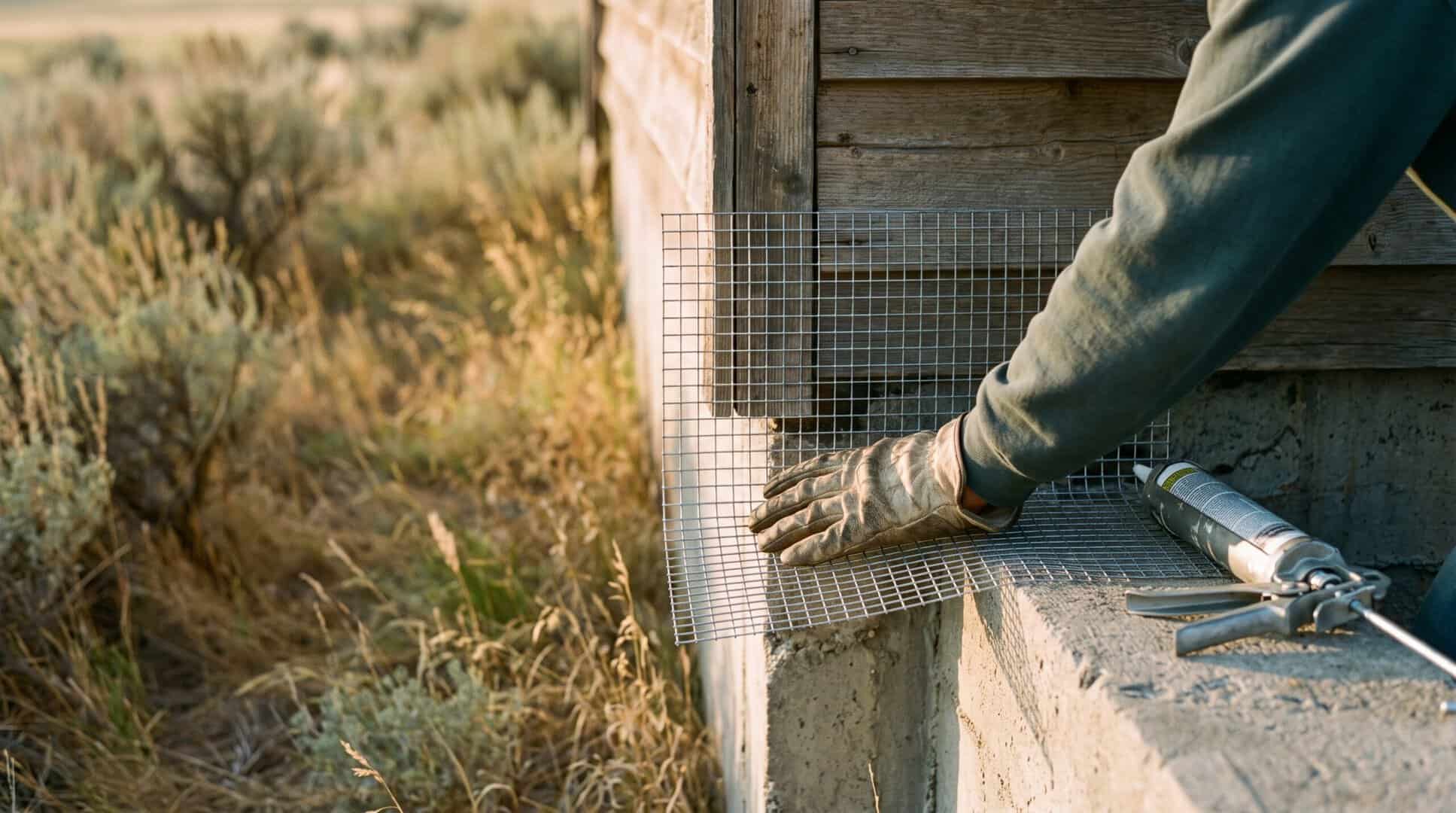
Exclusion is the permanent half of rodent work
Trapping solves today. Exclusion solves next year. If you only ever do the first one, you are on a rodent subscription: catch a few, quiet for a month, catch a few more.
Exclusion means finding every gap a rodent can use and closing it with material they cannot chew through. Done properly, it is the single most valuable thing you can buy from a pest control company, because it is the only part of the job that does not wear off.
How to tell you need it
- You keep catching mice. Repeat infestations mean an open door, not bad luck.
- You hear scratching or running in the walls or the ceiling, especially at night.
- Droppings keep reappearing after a clean up, particularly along a wall or behind an appliance.
- Gnaw marks around a vent, a door corner, a pipe penetration or the garage door seal.
- You live on the edge of a field, and it happens every autumn after harvest.
Where they get in
The gaps are rarely where people look. The common ones on Treasure Valley homes are the garage door seal at the bottom corners, the gap where the utility line or the AC line set enters the wall, crawlspace and foundation vents with damaged screen, the roofline where the soffit meets the fascia, dryer and bathroom vent covers, and the space under a door with a worn sweep.
How we seal it
Rodents chew through expanding foam and steel wool packs out over time, which is why the hardware store fix rarely lasts. We use materials rodents cannot get through: sealed metal mesh, hardware cloth, sheet metal, and mortar where it belongs. Vents get screened rather than blocked, because the vent still has to vent.
What we actually seal, and with what
Rodents chew. That single fact rules out most of what people put in a gap. Expanding foam is chewed straight through. Steel wool packs out and rusts. Caulk alone does nothing structural. All three are what we usually find when we get to a house someone has already tried to seal.
We use material they cannot get through, and we match it to the gap:
- Hardware cloth and sealed metal mesh for vents, which still have to breathe. A blocked crawlspace vent creates a moisture problem, which creates an insect problem. Vents get screened, never sealed shut.
- Sheet metal for gnawed corners and door bottoms.
- Mortar and structural sealant where the gap is masonry.
- Proper sweeps and seals on doors, including the garage, where the bottom corners are the single most common entry point on a Treasure Valley home.
Trap first, then seal. Always in that order.
Sealing a structure that still has rodents inside does not solve the problem, it locks it in. Now they cannot get out to forage, they die in wall voids, and you have a smell you cannot locate for a month.
So the order is fixed: remove what is inside, confirm it is gone, then close the building. Any company that turns up and starts sealing on day one is doing it backwards.
Why it pays for itself here
In a valley where the fields come right up to the houses, exclusion is not a luxury. A house on the edge of a subdivision in Kuna, Meridian or Middleton is going to get pressure every single autumn for as long as it stands there. You can pay to trap that population every year, or you can close the building once.
It is the only part of pest control that does not wear off, and it is the work we would want done on our own houses.
The inspection is the deliverable
Most of the value in an exclusion job is not the caulk gun, it is the hour spent finding the gaps. A mouse needs a hole the width of a pencil, and that hole is almost never in an obvious place. It is behind the AC line set, above the garage door track, under a deck where the siding stops short, or at the point where three different materials meet and none of them quite touch.
Your technician goes around the whole structure, low and high, and writes down every opening. You get told what he found, which ones matter, and what it takes to close them. Even if you decide to do some of the work yourself, knowing where the holes are is the thing you did not have before.
What it does not cover
Exclusion closes the building. It does not fix a structural problem that is creating the openings. If a section of soffit is rotted, or a foundation vent frame has failed, or a garage door has warped so badly it no longer meets the slab, that is carpentry, and we will tell you that plainly rather than screening over a hole that is going to reopen.
Exclusion pairs with rodent control, since sealing a house with rodents already inside just traps them in. Trap first, then seal. It is the highest value work we do in the farming towns, places like New Plymouth and Greenleaf where the fields come right up to the houses.