
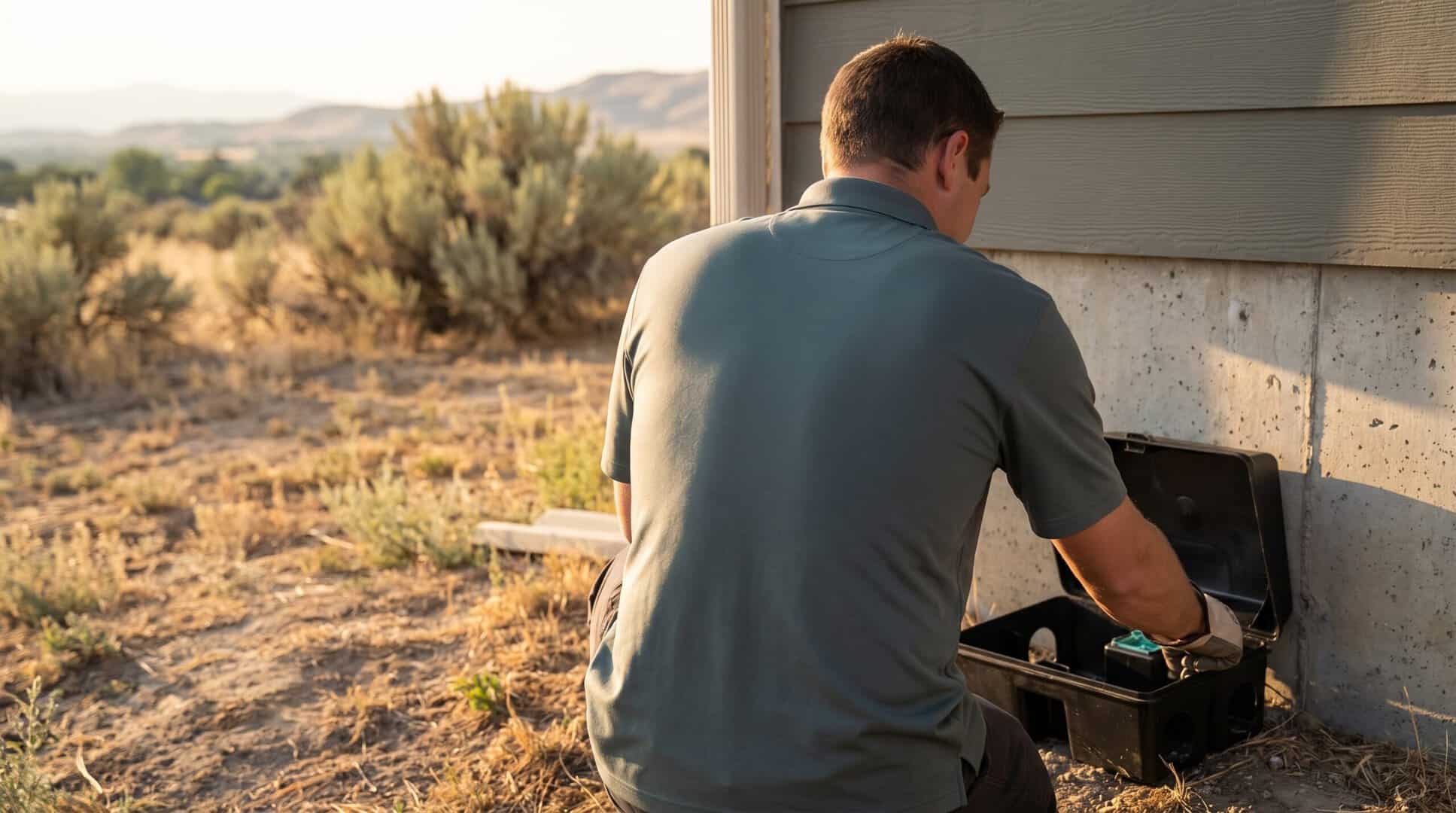
Rodents get in because there is a hole
A mouse fits through a gap the width of a pencil. A rat needs about the size of a quarter. Every rodent problem in a house is, underneath, a gap problem, which is why trapping alone never ends it. You catch the six that are inside, and the following month another six come through the same hole.
Farm ground makes this worse in the Treasure Valley. When a field is cut or harvested, the cover disappears and the rodents living in it move to the nearest structure. That is why calls spike in the fall, and why houses on the edge of a subdivision get hit hardest.
What rodents actually cost you
The droppings are the least of it.
- Wiring. Rodents gnaw constantly, and chewed wiring in a wall or an attic is a genuine fire risk.
- Contamination. They get into stored food, and they leave urine and droppings across pantry shelves and insulation.
- Disease. Rodents can carry disease, and their droppings can carry it too. Control and clean up mitigate that risk.
- Insulation. Attic insulation gets shredded for nesting and soiled, and it stops doing its job.
How we handle it
Inspect. We find how they are getting in and where they are running. Droppings, rub marks, gnawing and nesting material tell the technician more than a sighting does.
Trap. We remove the population that is already inside, with placements where they actually travel rather than where they were seen.
Exclude. We seal the gaps they are using so the next ones cannot follow. This is the step that ends the problem, and it is covered under rodent exclusion.
Clean up. Droppings and nesting material get dealt with, not left in the attic.
Do not just put out bait
Bait alone in a house is how you end up with a dead rodent in a wall void and a smell you cannot find for three weeks. It also does nothing about the entry point. If you have pets or small children, loose bait is its own hazard.
How to tell what you have
Mice and rats are different problems and the signs separate them:
- Droppings. Mouse droppings are small and pointed, roughly the size of a grain of rice. Rat droppings are noticeably larger and blunter.
- Sound. Mice are light and quick and you hear them in walls and ceilings at night. Rats are heavier and you hear them thump.
- Gnawing. Both gnaw constantly. Rats do more structural damage and will chew through much tougher material.
- Grease marks. Rats run the same routes along walls and leave dark rub marks. Mice explore more widely.
- Smell. A persistent musky ammonia smell in a confined space usually means an established population, not a stray.
Why the fall is our busiest month
It is not a coincidence and it is not the cold. When the surrounding fields are cut or harvested, the cover that a rodent population has been living under disappears overnight, and the entire population moves to the nearest structure with food and shelter. In this valley the nearest structure is very often a house on the edge of a subdivision.
If you live where the pavement meets the field, this happens to you every year, at roughly the same time. Getting the exclusion work done before harvest is worth several times what it costs to trap after it.
Rodents and your health
Rodents can carry disease, and their droppings and urine can carry it too. Cleaning up a contaminated space badly can make things worse by putting material into the air, which is why we handle the clean up rather than leaving it to you. Control and proper clean up mitigate the risk. We are not going to claim they eliminate it.
What it costs, and what actually ends it
A rodent job is priced on the size of the structure and the extent of the problem, and it usually runs across more than one visit because trapping takes time. But the honest answer about cost is this: the trapping is the part you pay for repeatedly, and the exclusion is the part you pay for once. If you only ever buy the trapping, you are renting a solution.
What we do about the mess
Droppings, urine and nesting material do not clean themselves up when the rodents are gone, and cleaning them up badly can put contaminated dust into the air. Sweeping or vacuuming a heavily contaminated attic is the wrong move.
Clean up is part of the job. Contaminated insulation and nesting material get removed and handled properly, and the space gets treated. That is not an upsell, it is the difference between the rodents being gone and the problem being finished.
Gravity Pest Control handles rodent control for homes and businesses across the valley, and we answer the phone 24 hours a day. Calls spike at harvest in the farming towns, so if you are in Weiser or Payette, get ahead of the autumn rather than waiting for the scratching to start.