
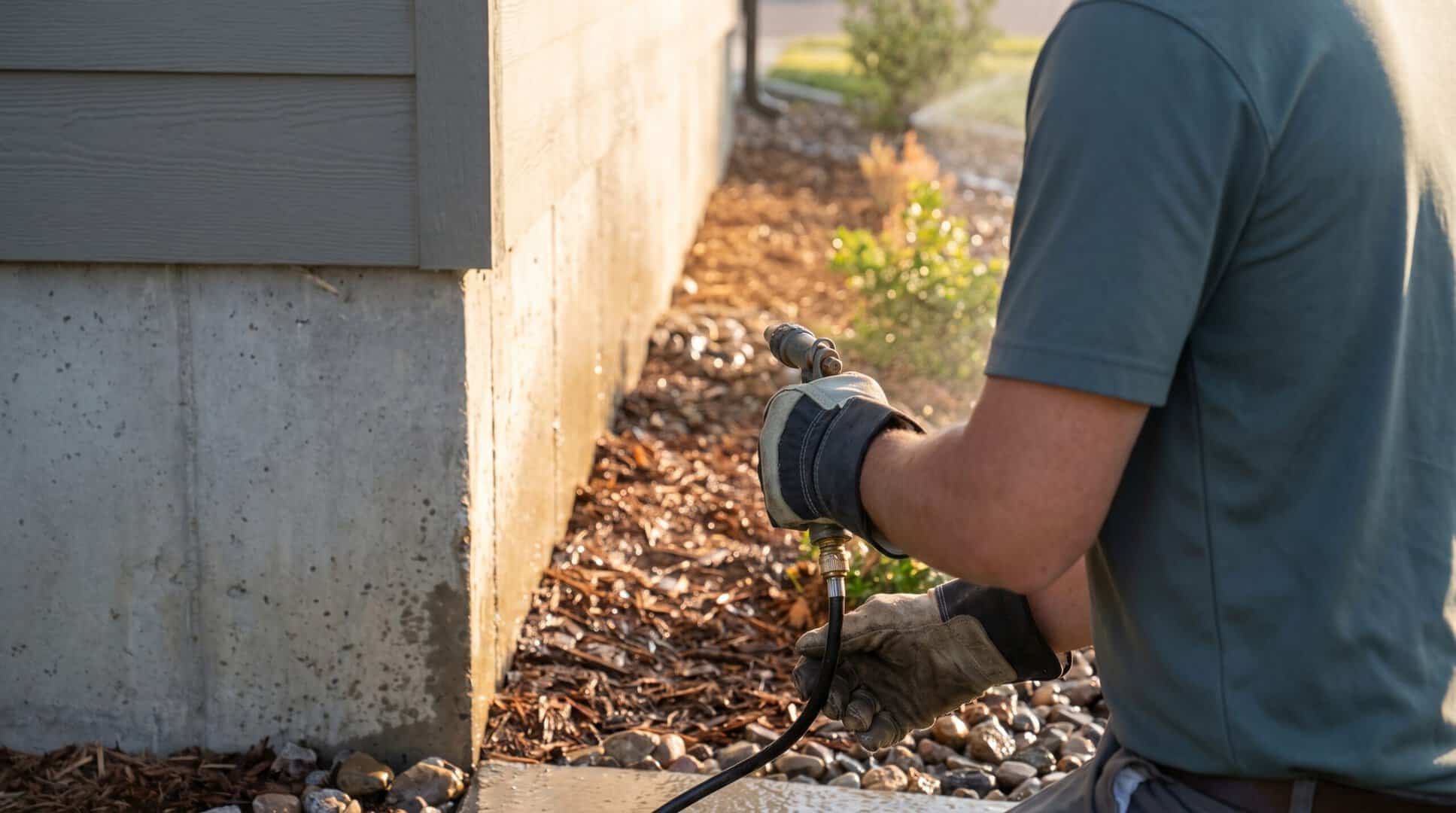
Why earwigs are so bad in the Treasure Valley
Earwigs need moisture, and irrigation gives them a whole valley of it. Flood irrigated lots, lawns watered every evening, and the damp ground under mulch and landscaping rock all create exactly the habitat earwigs breed in. That is why they are a far bigger problem here than in drier parts of the state.
They are nocturnal, so most people never see the population. They see the damage: ragged holes chewed in the leaves of the garden, seedlings cut down overnight, and the occasional earwig in the bathtub or the kitchen sink in the morning. The ones that get inside are usually looking for water, which is why they turn up in the wettest rooms of the house.
They do not sting, and the pincers cannot really hurt you. They are unpleasant, not dangerous.
Treating the harbourage, not the sighting
Earwigs spend the day hidden in damp, tight, dark places, and that is where treatment has to land. Spraying the baseboard where you saw one accomplishes almost nothing, because the population is outside in the landscaping.
Your technician works the places they actually harbour:
- Mulch beds, landscaping rock and the damp soil right against the foundation.
- Under boards, planters, hoses, woodpiles and anything else sitting flat on wet ground.
- Irrigation boxes, downspout outlets and the corner where a sprinkler head soaks the wall every night.
- Door thresholds, weep holes and utility penetrations, which is where they cross from outside to inside.
Fix the water and you fix most of it
The most useful thing a homeowner can do about earwigs has nothing to do with pesticide. Move the sprinkler head that is hitting the house. Pull the mulch back a few inches from the foundation. Get the hose and the stack of boards up off the wet ground. Earwigs cannot survive long in a dry strip, so a dry strip around the foundation does a lot of work for you.
What they actually do
Earwigs are scavengers and light feeders. Outdoors they eat decaying plant matter, other insects, and the soft growth of garden plants, which is why the damage shows up as ragged holes in leaves and seedlings clipped off overnight. Indoors they eat almost nothing and are simply lost, which is why they turn up in a bathtub or a sink and cannot get out.
The pincers look alarming and cannot really hurt you. And no, they do not crawl into ears. That is folklore, and it has been folklore for several hundred years.
The service, and the timing
Treatment goes into the harbourage rather than at the sightings: mulch beds, landscaping rock, the damp soil against the foundation, under boards and planters and hoses, in irrigation boxes, and along the door thresholds and weep holes they cross to get inside.
Timing matters more than people expect. Earwigs breed in spring, and the population you are fighting in July was set in April. Treating early, before the numbers build, is a fraction of the work of treating a peak population in midsummer.
The fixes that cost nothing
- Move the sprinkler head that hits the house. A wall that is wet every evening is an earwig nursery.
- Pull mulch and rock back a few inches from the foundation to create a dry strip.
- Get hoses, boards, planters and firewood up off the wet ground.
- Water in the early morning instead of the evening, so the ground dries during the day.
- Fix the door sweep. Most earwigs that get inside walk in under a door.
We will point out which of these apply to your lot when we inspect it, because on an irrigated property they do more than any spray will.
What earwig control costs
Earwig treatment runs with the general pest control plan. Given how strongly earwig pressure here tracks the irrigation season, the recurring plan is the version that actually keeps them out of the house.
Where they get in
Earwigs are ground-level insects, so they come in at ground level. The door threshold is the single most common route, particularly a garage door or a patio slider with a worn seal. After that it is the weep holes in brick, the gap around a hose bib or utility line, the crawlspace vent, and the seam where a basement window frame meets the foundation.
They are also good climbers, so a shrub or a vine touching the side of the house is a ladder. Trimming growth back off the wall does more for an earwig problem than most people expect.
The bathtub question
People find earwigs in the bathtub and the sink and assume they came up the drain. They almost never did. They came in at ground level, wandered until they found the most humid room in the house, then fell into a smooth-sided basin they could not climb out of. That is why the tub is where you see them.
It matters because it changes where the fix is. Pouring something down the drain does nothing. Sealing the threshold and drying out the perimeter does.
We will point out what is feeding the problem on your lot, and treat the harbourage that is left. Earwigs are worst on flood irrigated ground, which is why we treat so many of them around Wilder and Parma.